Petra Schmitz · 9 October 2026
Brookside Communities Navigate Wind Farm Expansions Alongside Athletic and Heritage Priorities
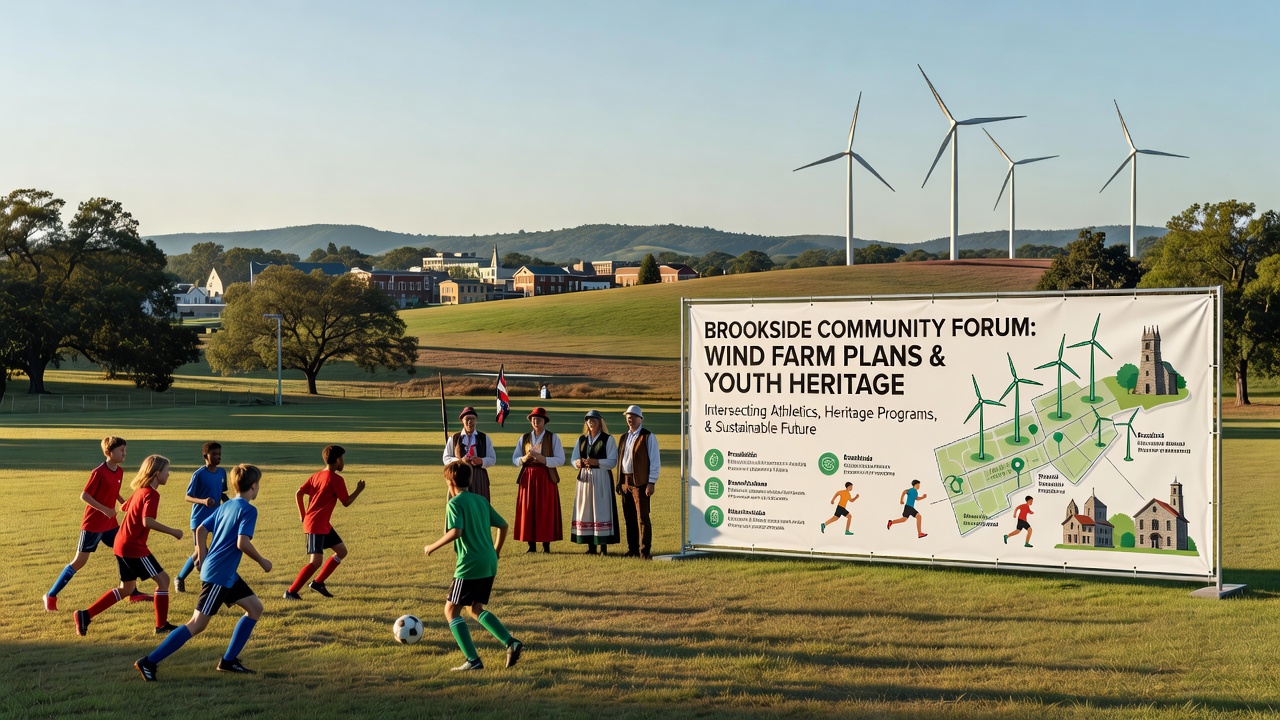
Wind farm proposals in Brookside Towns have begun to overlap with established youth athletics facilities and longstanding heritage programs, creating a complex set of planning considerations for local authorities and developers alike, and data from similar projects across multiple regions shows that such intersections often require coordinated adjustments to site layouts and community access routes. According to figures from the U.S. Department of Energy, wind installations can coexist with recreational spaces when buffer zones and shared infrastructure receive early attention in the design phase.
Local planning documents outline turbine placements that sit adjacent to several multi-use sports pitches used by youth leagues throughout the year, while heritage trails that trace 19th-century industrial routes run within a few hundred meters of proposed access roads. Those who've reviewed the preliminary maps note that construction timelines could affect seasonal training schedules unless alternative venues or temporary pathways are secured well in advance.
Project Scope and Timeline Details
Developers have submitted applications covering eight turbines across two sites, with an expected capacity that aligns with regional renewable targets set for the late 2020s, and environmental impact assessments released earlier this year indicate that noise and shadow flicker studies have already incorporated feedback from athletics clubs operating nearby fields. Public information sessions scheduled for October 2026 will allow residents to examine updated layouts that include dedicated corridors for heritage walking groups.
Heritage programs in the area focus on preserving both built structures and oral histories tied to the brookside landscape, and researchers from regional universities have documented how these initiatives draw participants from schools and community centers each season. The overlap with wind infrastructure means some interpretation panels along trails may need relocation, yet project engineers report that foundation work can avoid subsurface features identified in recent archaeological surveys.
Youth Athletics Considerations
Youth sports organizations in Brookside Towns run year-round programs on fields that border the proposed turbine arrays, and scheduling data collected over the past three years reveals peak usage between March and November for football, cricket, and athletics clubs. Planners have modeled construction vehicle movements to avoid overlapping with match days, while also examining options for upgraded floodlighting and drainage on secondary pitches that could absorb displaced activity.
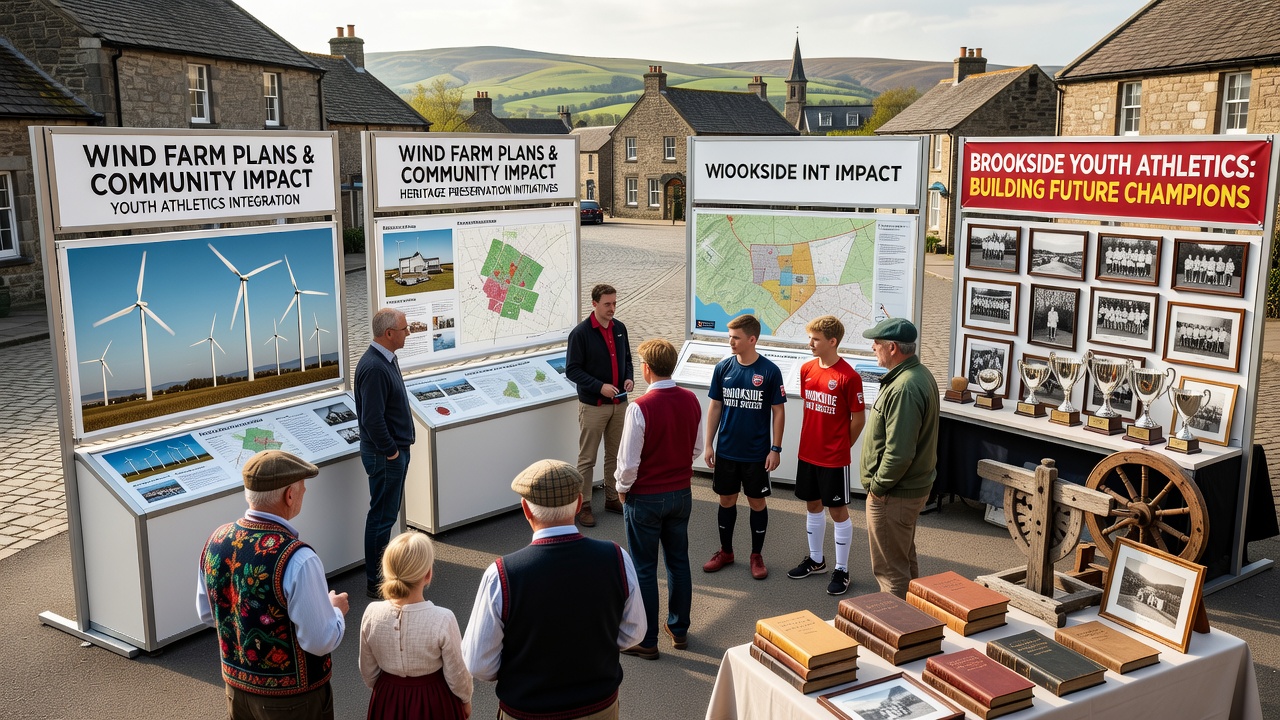
Studies compiled by Natural Resources Canada on comparable rural installations demonstrate that early integration of recreational needs into site plans reduces long-term conflicts, and similar approaches appear under discussion here through joint working groups that include coaches, parents, and heritage society representatives. Temporary fencing and signage during the build phase are among the mitigation measures listed in the latest consultation drafts.
Heritage Program Adjustments
Heritage initiatives rely on open access to sites that include a preserved mill wheel and several interpretive routes, and any changes to footpath alignments would require approval from the local conservation advisory panel. Project documents show that cable routing has been adjusted to skirt these areas, while still maintaining the efficiency targets required for grid connection. Observers note that such refinements often emerge after multiple rounds of stakeholder input rather than appearing in initial proposals.
October 2026 consultations will also cover potential educational partnerships, such as school visits to turbine sites that could complement existing heritage storytelling sessions. Funding streams tied to community benefit agreements have been referenced in outline terms, though specific allocation formulas remain under negotiation.
Regional Comparisons and Data Insights
Evidence from European Commission reports on renewable projects in mixed-use landscapes highlights successful cases where wind farms and youth facilities share perimeter landscaping that doubles as biodiversity corridors. Those patterns have informed some of the visual screening proposals now under review for Brookside, and figures indicate that such features can maintain sightlines to heritage markers while reducing perceived industrial scale.
Traffic modeling conducted for the current application projects a modest increase in heavy vehicle movements during the 18-month construction window, yet the figures remain below thresholds that triggered rerouting in comparable Australian wind developments tracked by the Clean Energy Council. Local highways teams continue to assess cumulative effects alongside other infrastructure works planned for the same period.
Conclusion
Coordination between wind development, youth athletics schedules, and heritage preservation continues through structured consultation channels, and the outcome of October 2026 sessions will shape final site configurations. Ongoing monitoring frameworks referenced in the planning submissions include annual reviews of access arrangements and noise compliance, providing structured pathways for adjustments as the projects advance.