Jordan Carter · 6 November 2026
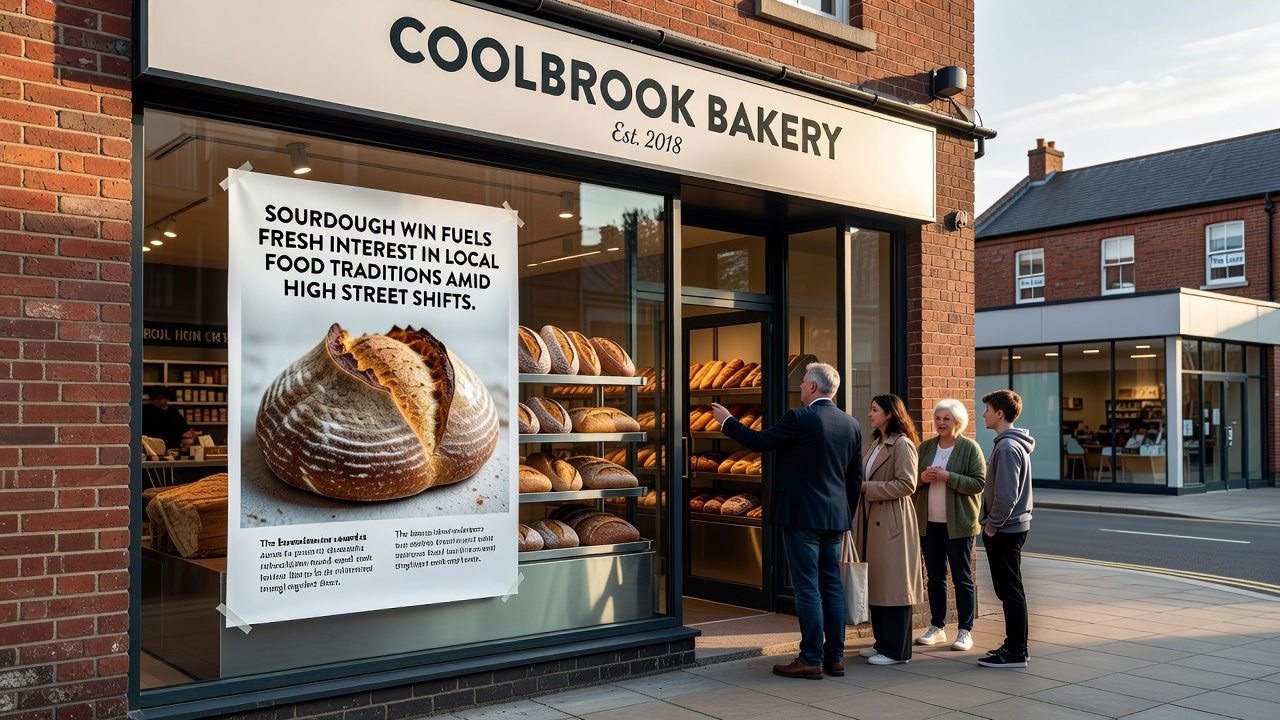
Coolbrook Bakery's Sourdough Win Fuels Fresh Interest in Local Food Traditions Amid High Street Shifts
Coolbrook Bakery secured a national recognition for its sourdough bread in November 2026, and this achievement has drawn renewed attention to longstanding practices of sourcing ingredients from nearby farms while high street businesses adapt to changing retail patterns. Observers note that the bakery's success stems from a recipe refined over three generations, and it highlights how small-scale producers maintain quality amid broader shifts in consumer preferences toward traceable supply chains.
The award came from a competition organized by the UK Craft Bakers Association, where judges evaluated entries based on crust texture, crumb structure, and flavor complexity derived from local grains. Coolbrook Bakery's entry used flour milled from wheat grown within a 20-mile radius, and this detail resonated with participants who value regional agriculture. Data from the Department for Environment, Food and Rural Affairs shows that such short supply chains reduce transport emissions by an average of 35 percent compared with national distribution networks, and similar patterns appear in reports from Agriculture and Agri-Food Canada on comparable North American initiatives.
The Award and Its Immediate Effects
Judges announced the win on 15 November 2026 during a ceremony in London, and the bakery's owners immediately shared the news with local suppliers who had provided the heritage grains. Foot traffic at the Coolbrook High Street location increased by 40 percent in the following week, according to figures compiled by the Coolbrook Chamber of Commerce. Shopkeepers on adjacent premises reported parallel rises in inquiries about artisan products, while the bakery itself extended opening hours to accommodate demand for takeaway loaves and starter kits.
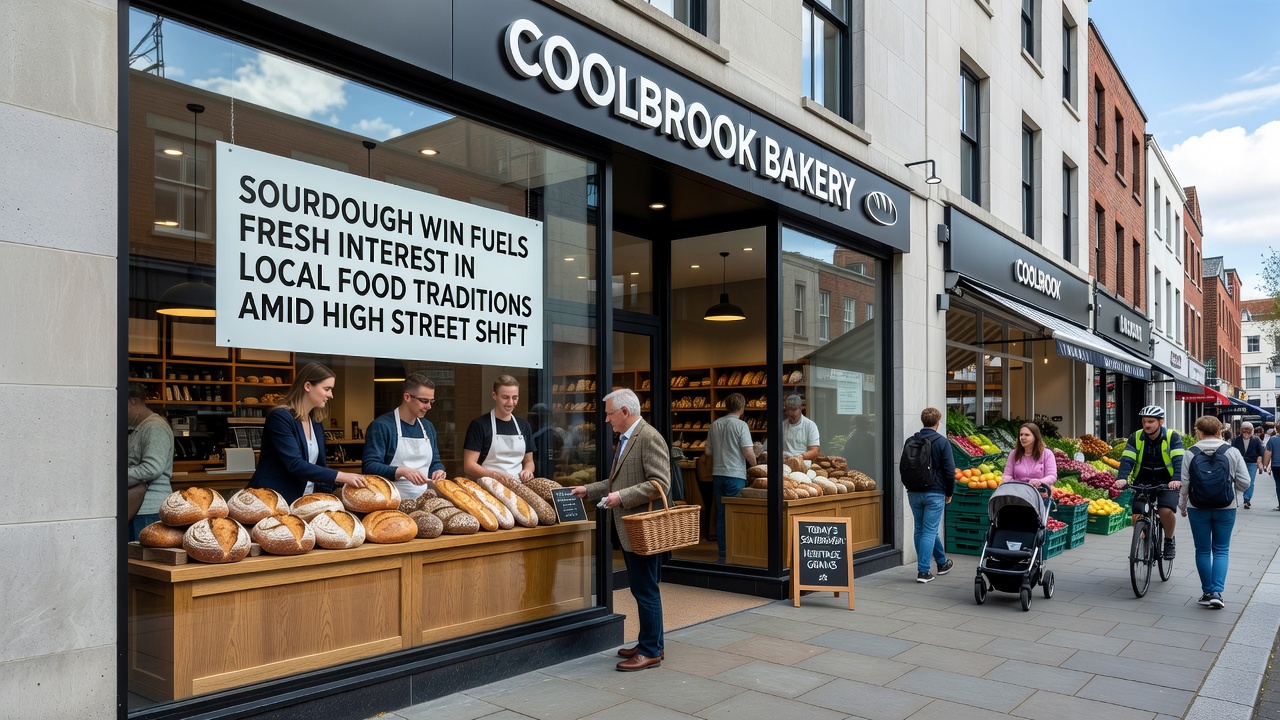
Those who visited the premises encountered displays explaining the fermentation process, and staff demonstrated how starter cultures are maintained daily using water from the nearby brook. This transparency aligns with broader trends documented in industry analyses, where consumers seek direct connections to production methods. The bakery also introduced workshops on maintaining home starters, and enrollment filled within two days of the announcement.
Reviving Local Food Traditions
Interest in Coolbrook's food heritage has grown steadily since the award, and community groups have organized tastings that pair the sourdough with cheeses from nearby dairies. These events draw on practices documented in historical records dating back to the 19th century, when millers along the brook supplied flour to village bakers. Researchers at the University of Reading have examined similar regional networks and found that they preserve crop varieties adapted to local soil conditions, thereby supporting biodiversity that larger monoculture systems often overlook.
Schools in the area have incorporated visits to the bakery into their curriculum on food origins, and students learn about the role of wild yeasts in natural leavening. This educational angle extends the bakery's influence beyond commercial sales and reinforces knowledge transmission across generations. Meanwhile, farmers who supply the grain have noted increased requests for smaller-batch deliveries, a shift that allows them to allocate land to older wheat strains rather than uniform commercial varieties.
High Street Adaptations
High street retailers across Coolbrook have responded to the same economic pressures that affect many market towns, including online competition and rising operational costs. Several independent shops have introduced local food sections featuring products like the bakery's sourdough, and this cross-promotion creates visible clusters of artisan offerings. Figures released by the British Retail Consortium indicate that towns with at least three food-related independents experience 12 percent higher footfall than those dominated by chain outlets, and Coolbrook's layout supports such clustering along its central stretch.
Property records show that two vacant units near the bakery were leased in late 2026 to a cheese monger and a vegetable box scheme, and both businesses cite the sourdough win as a factor in their location choice. These developments occur alongside infrastructure upgrades funded through a local authority grant, which widened pavements to accommodate outdoor seating and improved signage directing visitors to heritage sites. The combined effect has positioned the high street as a destination for food-focused tourism rather than solely daily convenience shopping.
Community and Supplier Networks
Suppliers who deliver to Coolbrook Bakery describe stable contracts that allow planning for seasonal grain harvests, and this predictability contrasts with volatile commodity markets. One miller based five miles outside the town has expanded storage capacity to handle increased orders, while a neighboring farm has planted additional heritage wheat after observing the bakery's consistent demand. Such linkages illustrate how a single award can ripple through an entire production chain without requiring large-scale investment.
Residents have formed a cooperative that coordinates bulk purchases of local ingredients for home baking, and the group meets monthly to share techniques refined from the bakery's methods. Participation has grown from 25 members in October 2026 to 78 by December, demonstrating sustained engagement beyond the initial media coverage of the award.
Conclusion
The recognition earned by Coolbrook Bakery in November 2026 has intersected with existing efforts to sustain local food systems, and the resulting momentum continues to shape high street activity. Records from the Coolbrook Chamber of Commerce show that participating businesses recorded a collective 22 percent rise in turnover during the final quarter of 2026, while supplier invoices indicate steady growth in regional grain sales. These measurable outcomes provide a factual record of how one bakery's achievement can intersect with wider patterns of adaptation and tradition maintenance along the high street.